Noureddine M
Mikolajek H,
Cowieson N,
Pinotsis N,
Robinson P,
Slater A,
Redwood C,
Loughna S,
Denning C,
Mohammed F,
Gehmlich K,
Nat Commun
17(1)
(2026)
Europe PMC
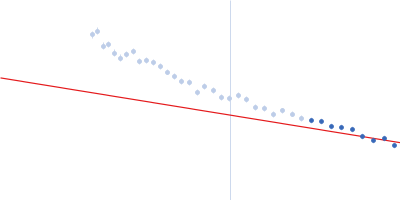
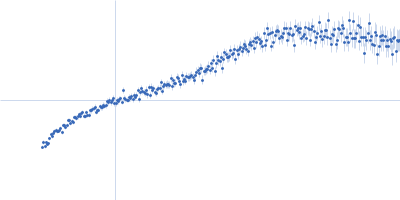
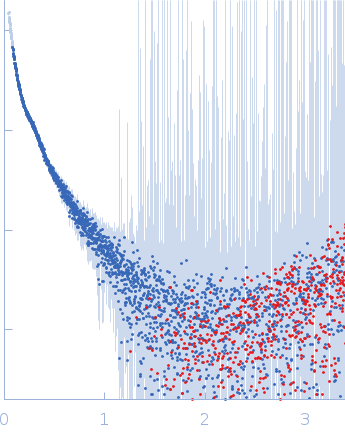
SASDZ35 – ACTN2-R93Q at 60 degrees (°C) using batch-mode SAXS
Synchrotron SAXS
data from solutions of
ACTN2-R93Q at 60 degrees (°C) using batch-mode SAXS
in
20 mM HEPES, 150 mM NaCl, pH 8
were collected
on the
B21 beam line
at the Diamond Light Source storage ring
(Didcot, UK)
using a Eiger 4M detector
at a sample-detector distance of 3.7 m and
at a wavelength of λ = 0.94 nm
(I(s) vs s, where s = 4πsinθ/λ, and 2θ is the scattering angle).
One solute concentration of 1.00 mg/ml was measured
at 60°C.
25 successive
1 second frames were collected.
The data were normalized to the intensity of the transmitted beam and radially averaged; the scattering of the solvent-blank was subtracted.
ACTN2 with R93Q missense variant, dimer peak using batch-mode SAXS at 60 degrees (°C)

 s, nm-1