Structural basis for therapeutic antibody binding to CCN2 and its mechanisms on TGF-β family signaling

Haben Gabir.

SASDV69 – Mouse Central Communication Network 2 (N-terminal Fragment)

Cellular communication network factor 2
MWexperimental 18 kDa
MWexpected 36 kDa
VPorod 29 nm3
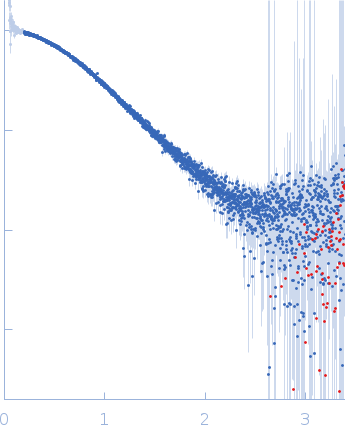
log I(s) 4.88×10⁻¹ 4.88×10⁻² 4.88×10⁻³ 4.88×10⁻⁴
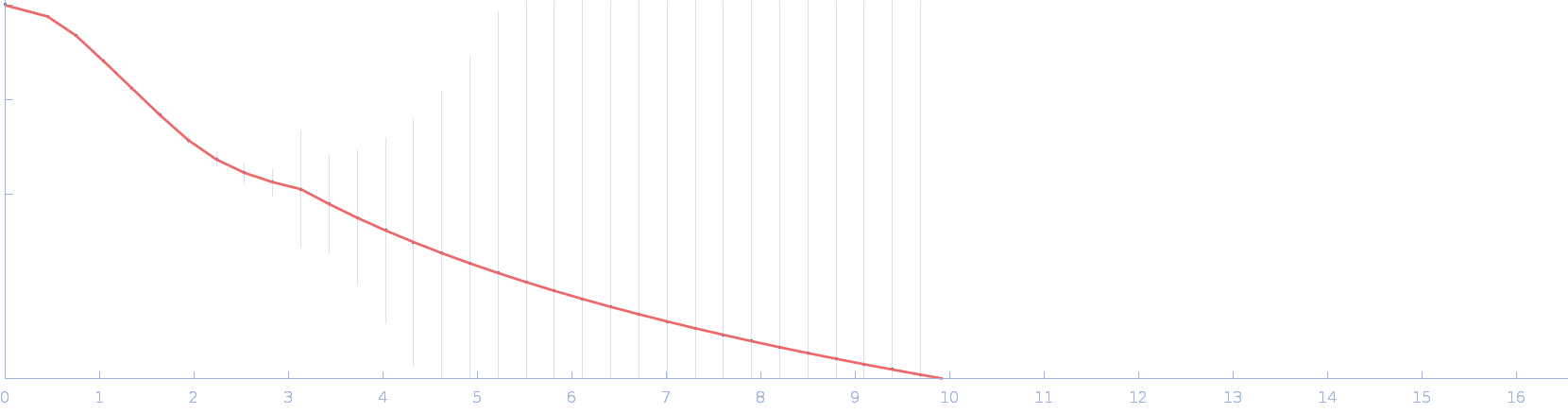
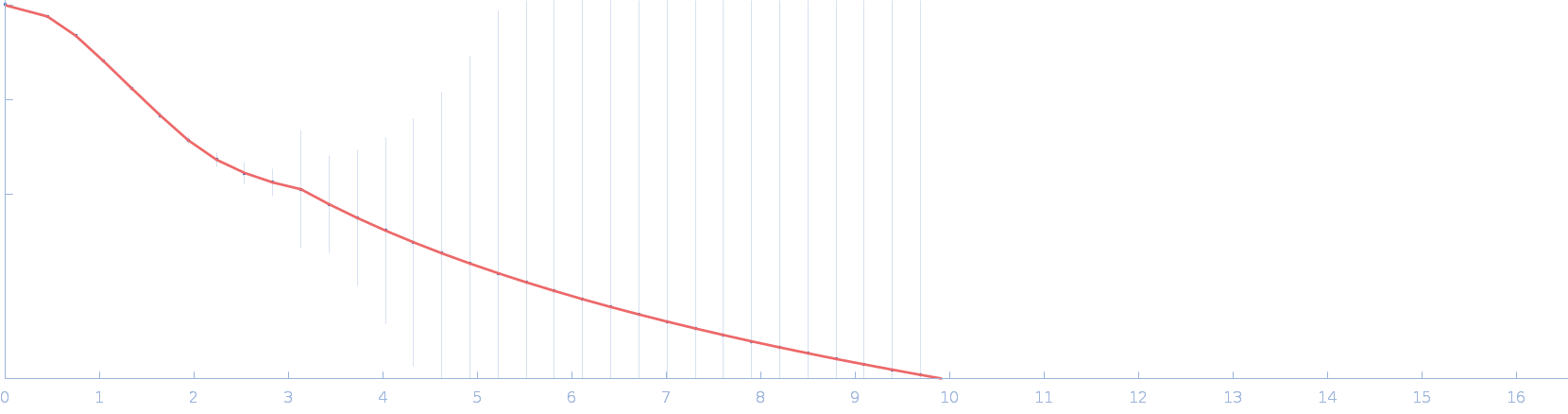
Cellular communication network factor 2 small angle scattering data  s, nm-1
ln I(s)
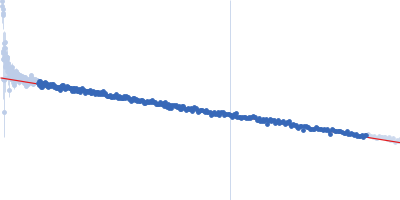
Cellular communication network factor 2 Guinier plot ln 4.89×10⁻¹ Rg: 2.1 nm 0 (2.1 nm)-2 s2
(sRg)2I(s)/I(0)
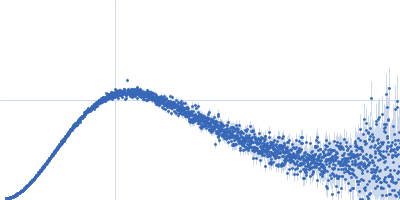
Cellular communication network factor 2 Kratky plot 1.104 0 3 sRg
p(r)
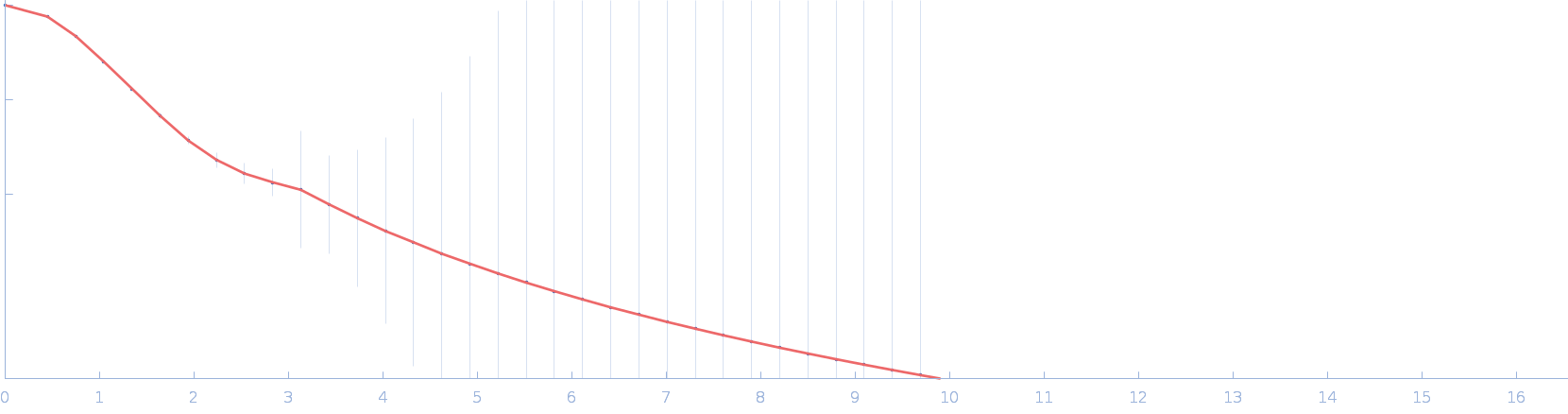
Cellular communication network factor 2 pair distance distribution function Rg: 2.1 nm 0 Dmax: 7.1 nm

Data validation


Fits and models


log I(s)
 s, nm-1

log I(s)
 s, nm-1

log I(s)
 s, nm-1

Synchrotron SAXS data from solutions of Mouse Central Communication Network 2 (N-terminal Fragment) in 50 mM Tris pH 7.5, 200 mM NaCl, pH 7.5 were collected on the B21 beam line at the Diamond Light Source storage ring (Didcot, UK) using a Eiger 4M detector at a sample-detector distance of 3.7 m and at a wavelength of λ = 0.09537 nm (I(s) vs s, where s = 4πsinθ/λ, and 2θ is the scattering angle). In-line size-exclusion chromatography (SEC) SAS was employed. The SEC parameters were as follows: A 50.00 μl sample at 5 mg/ml was injected at a 0.16 ml/min flow rate onto a column at 15°C. 599 successive 3 second frames were collected. The data were normalized to the intensity of the transmitted beam and radially averaged; the scattering of the solvent-blank was subtracted.

SEC column = UNKNOWN

Cellular communication network factor 2 (CCN2)
Mol. type   Protein
Olig. state   Monomer
Mon. MW   36.1 kDa
 
UniProt   P29268 (26-348)
Sequence   FASTA