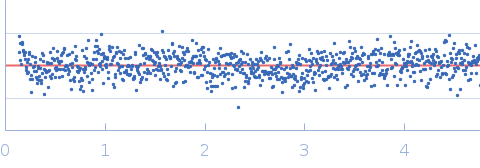
|
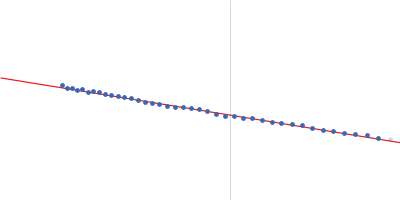
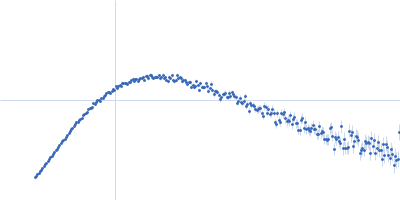
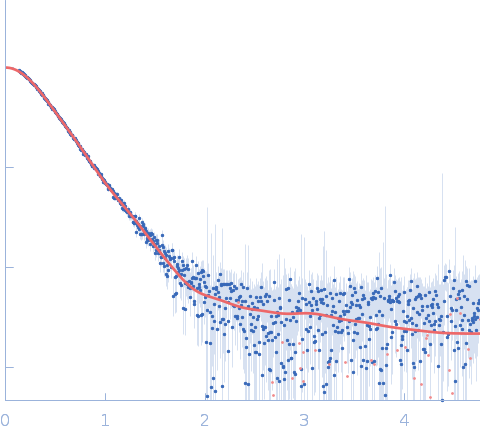
Synchrotron SAXS
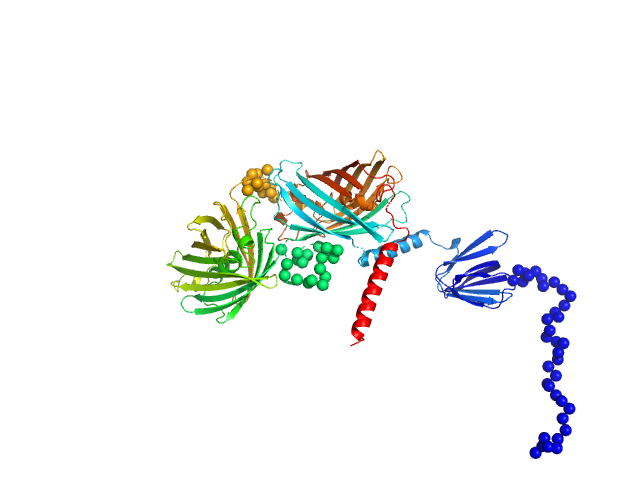
data from solutions of
ATPLyzer GO 1.7 m apo
in
50 mM MOPS, 100 mM KCl, 1 mM MgCl2,, pH 7
were collected
on the
BM29 beam line
at the ESRF storage ring
(Grenoble, France)
using a Pilatus3 2M detector
at a sample-detector distance of 2.8 m and
at a wavelength of λ = 0.099 nm
(I(s) vs s, where s = 4πsinθ/λ, and 2θ is the scattering angle).
In-line size-exclusion chromatography (SEC) SAS was employed. The SEC parameters were as follows: A 100.00 μl sample
at 4.9 mg/ml was injected at a 0.60 ml/min flow rate
onto a GE Superdex 200 Increase 10/300 column
at 10°C.
800 successive
3 second frames were collected.
The data were normalized to the intensity of the transmitted beam and radially averaged; the scattering of the solvent-blank was subtracted.
Please read the molecule description by clicking the molecule link. Collected raw SAXS data from the ESRF (proposal ID MX-2485) can be found under: https://doi.org/10.15151/ESRF-DC-2387389777
|
|

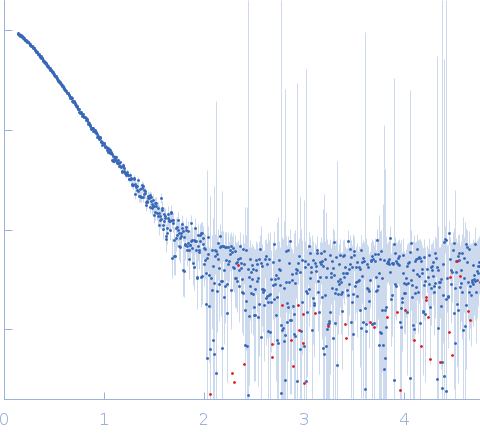 s, nm-1