|
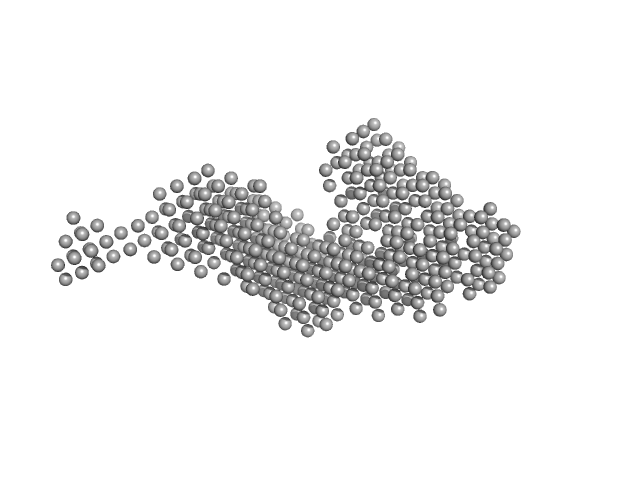
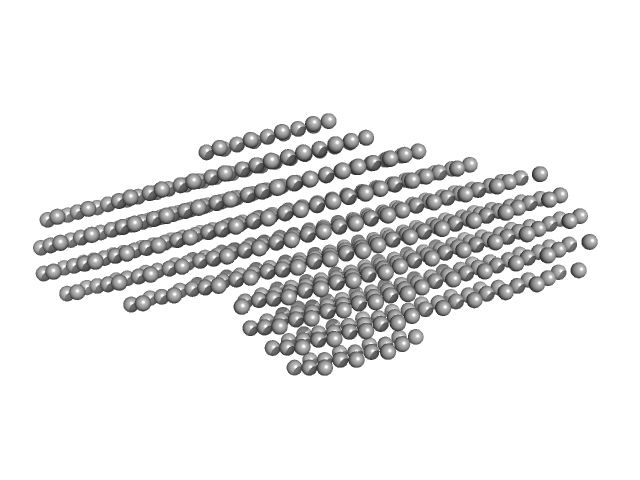
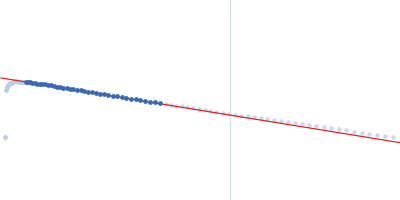
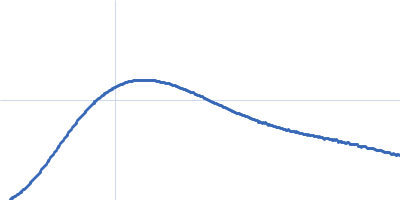
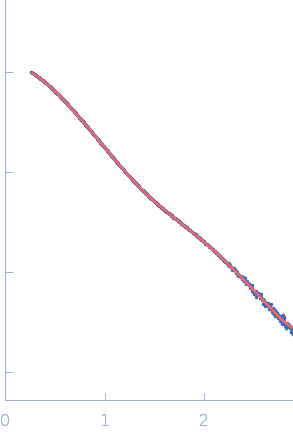
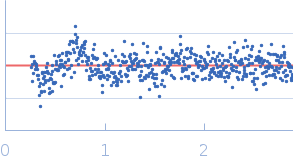
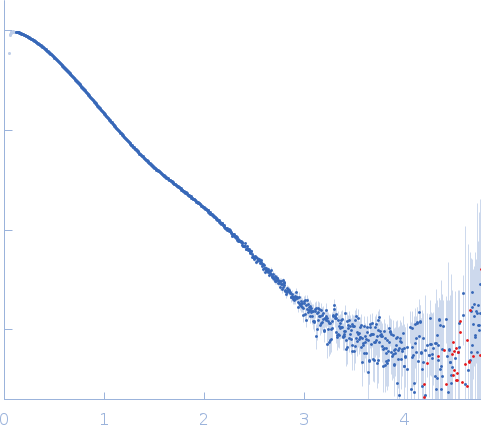
SAXS data for non-structural protein 9 (Nsp9) from SARS-CoV-2 with a 20-nucleotide RNA stem-loop with full phosphorothioate (PS) and 2′-OMe modifications (dSSOPS-m) at 1:1 molar ratio in 25 mM sodium phosphate pH 6.0, 150 mM NaCl, 1 mM DTT with 5% glycerol as a stabilizer. Data were collected at the BioSAXS beamline of the Australian Synchrotron. The X-ray wavelength was 1.002 Å; the detector was a Dectris Pilatus3X-2M with in-vacuum movable detector system, 172 µm2 pixel size, 25 Hz frame rate, count rate per detector pixel was 39.95 countss; the sample-to-detector distance was 3150 mm to yield a measured q-range 0.0051–0.4768 Å-1; exposures were 1 second for 16 exposures and absolute scaling used water as a secondary standard. Samples were spun at 21,000 x g for 5 min and degassed in a vacuum chamber for 5 min just prior to loading onto a 96-well plate for measurement. Concentration values are for the nominal Nsp9 component prior to that procedure according to absorbance at 280 nm. Shown here are the Nsp9:dSSOPS-m data with 6 mg/mL Nsp9, where the Nsp9 protein alone would be fully dimeric. The structural parameters for the scattering particle, including the Porod volume, are consistent with much larger species in solution than an Nsp9 dimer with bound dSSOPS-m can account for. The oscillations in the low-q residual difference plots indicate even larger species are present than the DAMMIN modeling against P(r) with dmax = 120 Å captures. A full concentration series (nominal Nsp9 concentration 0.05–10 mg/mL) was performed and data for all concentrations are available in zipped folders with this deposition.
.
|
|

 s, nm-1